Advanced treatments demand clinical-grade recovery — epicite® CALM meets the moment with sterile, soothing care
As the consumer demand for aesthetic procedures, such as laser resurfacing and microneedling, continues to grow, the focus is shifting to what happens after the treatment. Post-treatment care is no longer a cosmetic afterthought — it is a clinical necessity. With innovations such as epicite® CALM, practitioners can now offer medical-grade recovery that enhances outcomes, ensures safety, and meets patient expectations.
Minimally invasive aesthetic procedures were once dominated by hyaluronic acid fillers, which, while effective, often resulted in overfilling and an unnatural appearance. Today, there is a shift towards treatments that use devices to enhance the body’s own collagen production, such as laser resurfacing, microneedling, and other energy-based technologies. According to the ‘2024 Plastic Surgery Statistics Report’ by the American Society of Plastic Surgeons (ASPS)1, skin resurfacing is the fastest-growing segment in the field. Skin resurfacing — which includes dermabrasion, ablative and non-ablative lasers, and microdermabrasion — has moved to the forefront of aesthetic medicine, growing by 6% in 2024 compared to the previous year. In fact, the combined number of skin resurfacing and laser-based skin treatments reached approximately 6.8 million procedures last year in the U.S. alone.
Yet, as treatments become more advanced, they also leave the skin more vulnerable. The skin, often left in a fragile, wound-like state, requires more than cosmetic creams or over-the-counter solutions. It demands medical-grade recovery solutions that prioritise safety, efficacy, and patient comfort. As the American Board of Cosmetic Surgery puts it2, the success of a treatment ‘depends not just on the technology used, but also on the provider’s expertise and your post-treatment skin care.’
Fragile skin, powerful treatment
Today’s aesthetic procedures are more advanced — and more intense — than ever before. Technologies such as CO₂ lasers and radiofrequency (RF) microneedling are transforming skin rejuvenation by reaching deep into the dermis, sometimes up to 8 mm, to stimulate collagen production and cellular renewal. The results are impressive: improved texture, reduced scarring, and visible anti-ageing effects. However, the intensity of these treatments also introduces new challenges.
CO₂ laser treatments, for instance, can reach temperatures nearing 100°C, vaporising damaged skin layers and triggering a healing response. RF microneedling, while less invasive, still creates micro-wounding combined with energy delivery, making the skin highly sensitive post-procedure. In both cases, the skin is temporarily transformed into a wound-like state, making it more susceptible to infection, prolonged erythema, and unwanted pigmentation if not properly cared for.
When aftercare falls short — a regulatory reality check
Despite the clinical sophistication of today’s aesthetic treatments, many post-care routines still rely on cosmetic products that were never designed for compromised skin. These non-sterile solutions often contain preservatives, fragrances, or active ingredients that can irritate or even damage healing tissue — especially when the skin is in a vulnerable, post-procedural state.
This disconnect between treatment intensity and aftercare quality is drawing increasing scrutiny from regulators. As safety standards tighten, practitioners who continue to use cosmetic-grade products risk not only poor patient outcomes but also reputational and legal consequences. The message is clear: post-treatment care must evolve to meet medical standards, with sterile, standardised solutions that align with both clinical needs and regulatory expectations.

Setting a new standard with sterile aftercare
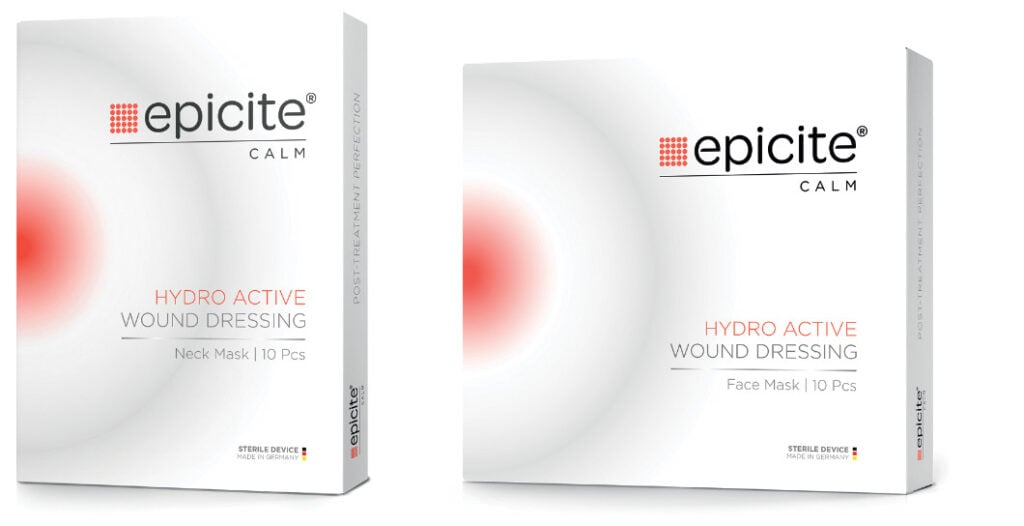
To meet the growing demands for high-quality post-treatment care, the innovative university spin-off JeNaCell developed epicite® CALM — currently the only medical-grade dressing made from biosynthetic cellulose specifically designed for post-aesthetic procedures. This development was a natural extension of JeNaCell’s expertise in wound healing, building on the success of the epicite® product family, which was first introduced in 2017 for the treatment of second-degree burns — injuries that are more severe but clinically comparable to the wounds resulting from many aesthetic treatments. The product line also includes solutions for managing chronic wounds, further reinforcing the clinical foundation behind epicite® CALM.
Now part of Evonik, JeNaCell benefits from the company’s extensive experience in supplying bioresorbable materials to the medical device and aesthetics industries, ensuring that epicite® CALM is backed by both scientific innovation and industrial reliability.
‘Our goal was to create a product that not only meets the highest safety standards but also enhances the patient experience and reduces downtime after a treatment,’ explains Julia Born, Director of Strategic Marketing for Medical Devices at Evonik Health Care.
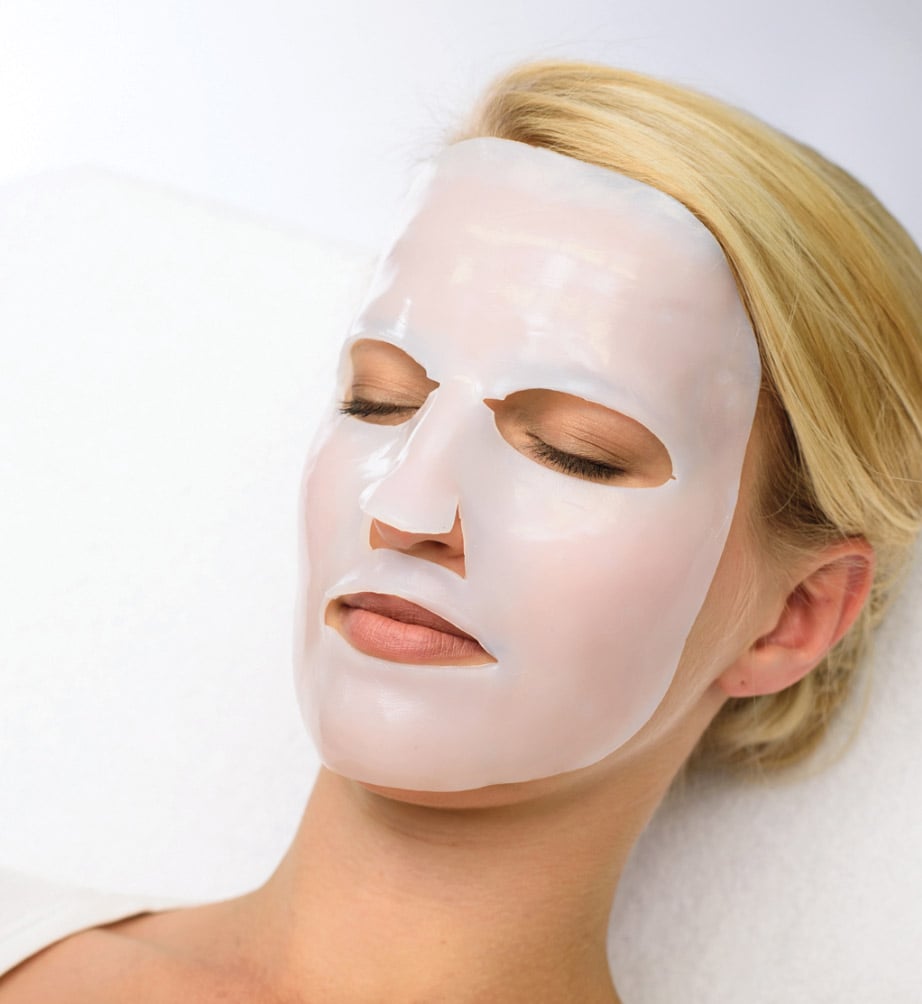
Made from biosynthetic cellulose, epicite® CALM has a non-occlusive structure, which allows the skin to breathe while delivering a cooling and soothing effect that reduces redness and erythema. Unlike occlusive masks that can trap heat and lead to fatty pustules, epicite® CALM supports natural healing without compromising comfort or safety3-6.
Its clean formulation, free from active ingredients, alcohol, parabens, and fragrances, makes it ideal for sensitive, irritated, or treatment-prone skin. This is particularly important given the regulatory risks associated with applying cosmetic products to broken skin. With epicite® CALM, practitioners can offer a medical-grade solution that aligns with both clinical needs and patient expectations.
Certified under the European Medical Device Regulation (MDR), epicite® CALM is the only sterile medical device in its category designed specifically for post-aesthetic procedures.

Better healing leads to happier patients
In aesthetic medicine, patient satisfaction is everything. Comfort, recovery time, and visible results all play a role in how a treatment is perceived, and whether a patient returns. By integrating epicite® CALM into post-treatment protocols, clinics can reduce downtime, minimise adverse reactions, and improve healing outcomes — ultimately increasing the value of the treatment itself.
As the global market for laser, light and energy-based procedures continues to grow — projected to reach USD 10 billion by 20277 — the demand for reliable, standardised aftercare will only intensify. Practitioners who adopt forward-thinking solutions, such as epicite® CALM, position themselves at the forefront of safe, effective, and patient-centred care.
‘It’s about giving professionals the tools they need to deliver the best aesthetic outcomes, safely and consistently,’ Julia Born adds.
Recovery as a central concern
As aesthetic medicine continues to push boundaries, recovery must keep pace. Post-treatment care is no longer a secondary concern — it is a critical part of the treatment journey. The success of any aesthetic treatment lies not only in the procedure itself but in the care that follows. With epicite® CALM, Evonik offers a solution that meets the demands of modern procedures, regulatory standards, and patient well-being.

Learn more about epicite® CALM: www.epicite.com/en/calm
References
- American Society of Plastic Surgeons (ASPS). 2024 Plastic Surgery Statistics Report. ASPS. 2025. Available from: https://www.plasticsurgery.org/documents/news/statistics/2024/plastic-surgery-statistics-report-2024.pdf
- How to Avoid Scarring after Cosmetic Laser Treatment [Internet]. ABCS. 2024 [cited 2025 Aug 28]. Available from: https://www.americanboardcosmeticsurgery.org/making-safe-choices/avoid-scarring-after-cosmetic-laser-treatment/
- Holzer, J.C.J., Tiffner, K., Kainz, S., Reisenegger, P., Bernardelli de Mattos, I., Funk, M., Lemarchand, T., Laaff, H., Bal, A., Birngruber, T., Kotzbeck, P., Kamolz, L.-P., 2020. A novel human ex-vivo burn model and the local cooling effect of a bacterial nanocellulose-based wound dressing. Burns 46, 1924–1932. https://doi.org/10.1016/j.burns.2020.06.024
- Luca-Pozner, V., Nischwitz, S.P., Conti, E., Lipa, G., Ghezal, S., Luze, H., Funk, M., Remy, H., Qassemyar, Q., 2022. The use of a novel burn dressing out of bacterial nanocellulose compared to the French standard of care in paediatric 2nd degree burns – A retrospective analysis. Burns 48, 1472–1480. https://doi.org/10.1016/j.burns.2021.11.019
- Resch, A., Staud, C., Radtke, C., 2021. Nanocellulose based wound dressing for conservative wound management in children with second-degree burns. International Wound Journal 18, 478–486. https://doi.org/10.1111/iwj.13548
- Hecker, A., Lumenta, D.B., Brinskelle, P., Sawetz, I., Steiner, A., Michelitsch, B., Friedl, H., Gmainer, D., Kamolz, L.-P., Winter, R., 2022. A Randomized Controlled Trial of Three Advanced Wound Dressings in Split-Thickness Skin Grafting Donor Sites—A Personalized Approach? JPM 12, 1395. https://doi.org/10.3390/jpm12091395
- BCC Research. Antiaging Products and Services: The Global Market [Internet]. Bccresearch.com. 2023 [cited 2025 Aug 28]. Available from: https://www.bccresearch.com/market-research/healthcare/anti-aging-products-services-report.html