Dr Marwa Ali explains why regenerative aesthetics provides a strong alternative to controlled damage

For decades, aesthetic medicine has been built on a single prevailing philosophy: in order to regenerate the skin, we must first injure it. From ablative lasers and aggressive chemical peels to deep radiofrequency and even the strategic placement of filler, the narrative has always been that controlled trauma stimulates repair. Damage the dermis, trigger inflammation, and collagen will follow, but what if the future of anti-ageing actually lies in combining this approach with intelligent regeneration?
We are now witnessing a significant shift in patient demand and clinical innovation. Invasive procedures are being delayed by tweakments, and even filler injections (once the gold standard of facial rejuvenation) are slowly losing popularity among a more discerning, better-informed patient population. Today’s patient is seeking something different: longevity over immediacy, skin health over artificial volume, and regeneration over reaction. With a boom in polynucleotide technology and PLLAs such as JULÄINE™ (Nordberg Medical, Huddinge, Sweden), injectables always have a place in rejuvenation, but the goal is now different.
I believe the next wave in aesthetics will be ‘No-Trauma Treatments’: technologies that stimulate collagen and restore function without provoking extreme heat, tissue destruction or prolonged inflammation. For some, downtime is not an option, and without sacrificing patient outcomes, we can deliver optimal results with a different approach. At Harrods Wellness Clinic, this philosophy underpins everything we do. It’s time to replace the era of ‘no pain, no gain’ with a much more palatable ‘less trauma, sustainable gain.’
Is this the end of the trauma paradigm?
Traditional resurfacing devices rely on thermal injury. High heat creates micro-wounds in the skin, initiating a wound-healing cascade. This inflammation recruits fibroblasts, which then lay down new collagen. The result can be effective, but it can come at a cost: downtime, risk of pigmentation, barrier disruption, and, in some cases, long-term sensitisation. In the right hands, trauma-induced skin optimisation is a viable option that reaps rewards, but only with careful consideration of the patient’s recovery timeframe.
Repeated inflammatory cycles may not always be the best route to longevity. Chronic inflammation, even at low levels, is increasingly recognised as one of the fundamental drivers of ageing, what we refer to as ‘inflammageing.’ If inflammation accelerates ageing systemically, do we need to repeatedly rely on it therapeutically?
Modern regenerative aesthetics asks a more refined question: can we stimulate collagen directly, precisely and safely, without triggering a full trauma response?
Collagen banking: skinsurance for the future
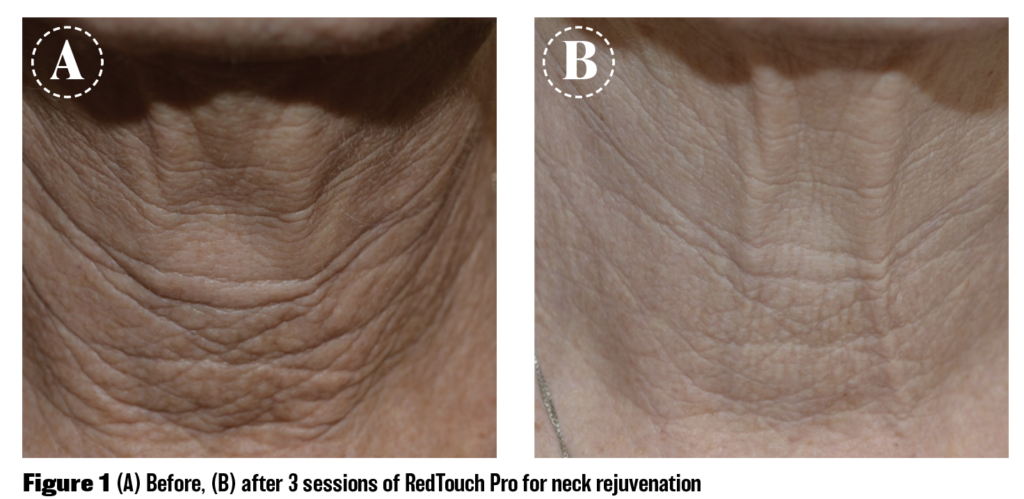
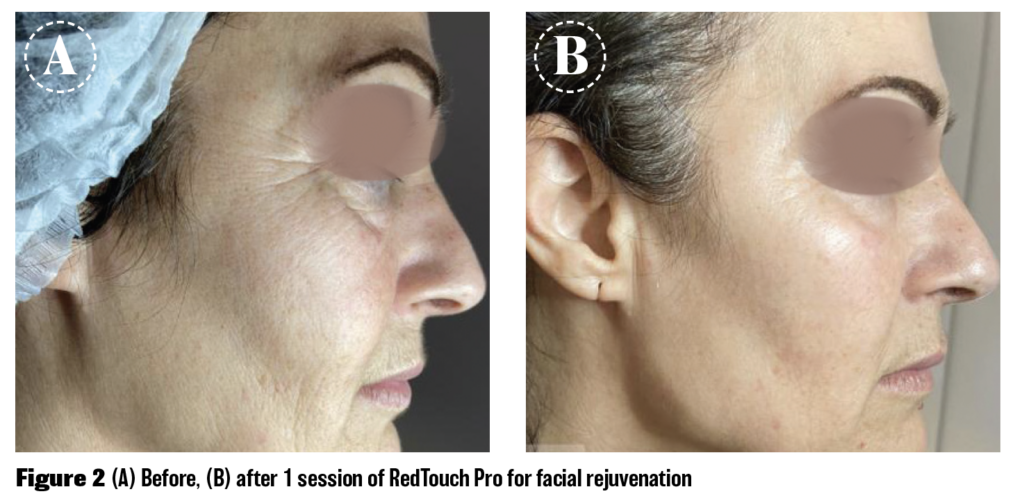
At the forefront of this movement is Lynton’s RedTouch PRO (DEKA M.E.L.A. s.r.l., Florence, Italy), a 675 nm laser system that we have just introduced in the UK at Harrods Wellness Clinic.
Unlike traditional lasers that target water or pigment, RedTouch PRO works directly and selectively on collagen. The 675 nm wavelength bypasses melanin and epidermal tissue, reaching the mid-dermis where collagen types I, III and IV reside. There is no ablation, no epidermal disruption, no excessive heat diffusion. Instead, the laser delivers controlled micro-pulses that stimulate fibroblast activity at its source.
The concept I share with my patients is simple: collagen banking. From our mid-twenties onwards, we lose approximately 1% of collagen per year. By our forties and fifties, this cumulative loss becomes visible as laxity, fine lines and textural change. With RedTouch PRO, we are not just correcting existing damage; we are proactively restoring and preserving collagen density over time.
Each treatment session builds on the last. There is no anaesthetic, no downtime, and no interruption to daily life. Patients return to work immediately, glowing rather than peeling. Over three to six sessions, spaced eight to twelve weeks apart, the dermal architecture strengthens progressively. Monthly maintenance helps patients future-proof their skin for true ‘skinsurance.’ Instead of waiting for ageing to appear and then aggressively correcting it, we are quietly, intelligently preventing it.
The Korean influence: clear glass skin without damage
This no-trauma philosophy aligns closely with Korean aesthetic trends, where the focus has long been on prevention, hydration and luminosity rather than heavy intervention. The coveted ‘glass skin’ look — smooth, poreless, luminous and translucent — is not achieved through trauma, but only through layered regeneration.
At Harrods, our Korean Glass Skin Facial is a synergistic protocol combining Lynton RedTouch PRO for targeted collagen stimulation, LDM® Triple (Bruchsal, Germany) technology for regenerative ultrasound therapy and Dermalux MD LED (Warrington, UK) for cellular repair and anti-inflammatory support. This multi-modal approach treats the skin as an ecosystem rather than a surface.
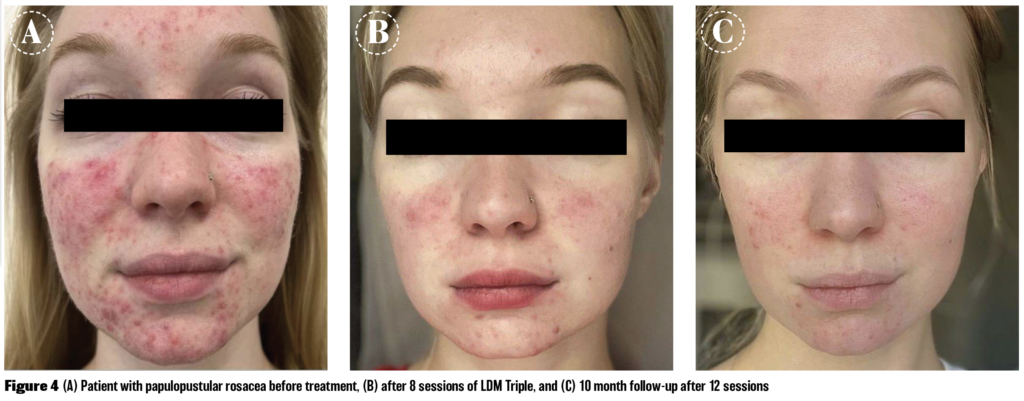
The CAV1 regulator
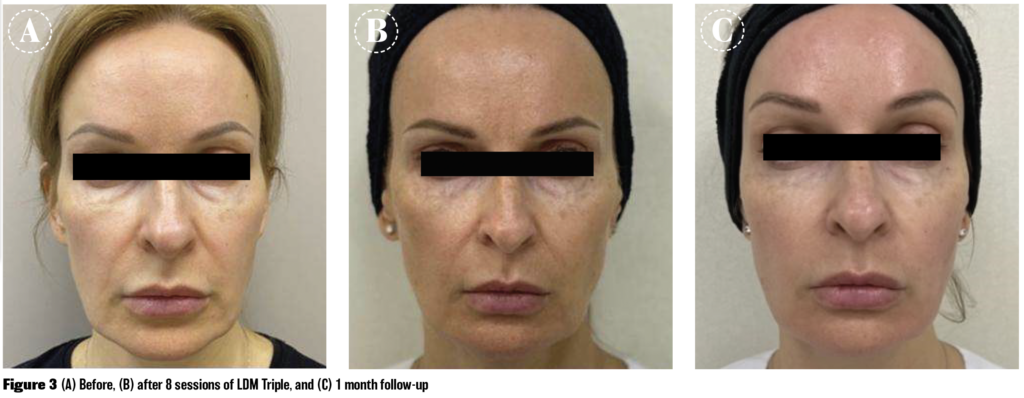
Recently launched from Germany and already one of the most requested treatments in Korea, LDM Triple represents another leap forward in regenerative technology.
This medical-grade ultrasound device operates at multiple frequencies, including 1MHz, 3MHz, 10MHz, and up to 19MHz, delivering dynamic wave patterns into the dermis. Its niche is its ability to regulate Caveolin-1 (CAV1), a protein critical to skin integrity, inflammation control and cellular repair.
CAV1 plays a central role in maintaining dermal homeostasis. Dysregulation has been linked to ageing, acne, rosacea and impaired barrier function. By modulating CAV1 expression, LDM Triple reduces inflammation, accelerates collagen synthesis, improves hydration and barrier strength, and enhances recovery post-procedure.
We once believed that intensity equalled efficacy, but this device challenges that assumption entirely. Remarkably, it is gentle enough to be performed daily without redness, peeling or compromise to the skin barrier, which is almost unheard of in device-based aesthetics. It is suitable for ageing skin, inflammatory conditions, acne scarring and post-treatment repair.
LED: the cellular amplifier
To complete our Korean Glass Skin Facial protocol, we integrate Dermalux MD LED, delivering clinically proven wavelengths of red, blue and near-infrared light to enhance adenosine triphosphate (ATP) production and optimise cellular function.
LED therapy has long been misunderstood as ‘just a light.’ In reality, photobiomodulation stimulates mitochondrial activity, increases circulation and further supports collagen production. When paired with RedTouch and LDM Triple, it amplifies regenerative signalling without adding trauma. The result is skin that appears refined, hydrated, and radiant, not inflamed.
The decline of filler culture
There is also a cultural shift underway. Patients are increasingly wary of overfilled faces and unnatural volume, instead opting for authenticity. They want to look well-rested, not altered.
Bioregenerative treatments such as polynucleotides and exosomes began this transition, moving from volumisation to cellular repair. However, even injectable distillates create micro-trauma through needle penetration. I prefer to administer them via a cannula rather than injecting them with a needle. The blunt cannula allows you to distribute the biostimulator over a larger surface area with fewer entry points into the skin, reducing the risk of bruising and trauma to the surrounding structures.
No-trauma device technologies take this evolution one step further. We can stimulate fibroblasts, regulate inflammatory pathways and rebuild dermal density without puncturing, heating or ablating, for aesthetic longevity.
A new standard
Patients today are sophisticated and seek evidence-led treatments that deliver cumulative benefit. They are not chasing dramatic before-and-afters, but instead cultivating resilient, healthy skin that ages slowly and beautifully.
When I experienced the Korean Glass Skin facial myself, I noticed visible luminosity and firmness after a single session. Over time, the effect compounded: subtle, powerful and entirely natural.
Intelligent, not aggressive
As clinicians, we must continually reassess long-held beliefs. The idea that we must injure the skin to heal it is being challenged by emerging science, with precision replacing inflammation as our primary tool.
The future of anti-ageing is changing and treatments are adapting to the recovery needs of patients. Direct collagen targeting, cellular-level protein regulation, and barrier preservation, with zero downtime and cumulative, repeatable results, are quickly gaining traction.
Patients are considering whether they want to recover from their treatments or if downtime is not an option. They want treatments that work with their biology for intelligent regeneration with little to no trauma, no inflammation cascade, and no dramatic peeling. The most powerful results don’t always have to come from how aggressively we treat the skin, but from how intelligently we respect it.
- Declaration of interest None
- Figure 1 © Prof. Paolo Bonan; Figure 2 © Dr Silvia Bianchi; Figure 3 © Dr I. Chervinskaya; Figure 4 © Wellcomet GmbH