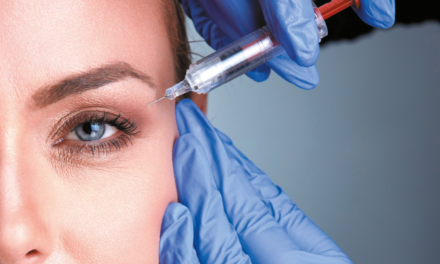
From collagen stimulation to fat metabolism and neuroregeneration, peptides are redefining aesthetic practice. Raheleh Sarbaziha, MD, and David J. Goldberg, MD, explore their mechanisms, delivery routes, and clinical synergy

The emergence of peptides in aesthetic and regenerative medicine has marked a paradigm shift in how clinicians address ageing, skin health, and systemic vitality. These bioactive molecules—administered via injection, topical application, intravenous infusion, or nasal delivery — offer targeted solutions for a wide spectrum of cosmetic and functional concerns, including skin laxity, inflammation, fat accumulation, hormonal imbalance, and cognitive decline3,4,10–13, 16–18.
However, it is crucial to recognise that not all peptides are created equal, and appropriate protocols, delivery methods, and clinical insight are essential to ensure optimal outcomes and patient safety. While some peptides are FDA-approved for specific indications, others are used off-label within a well-informed, integrative framework. Patient variability in metabolism, hormone levels, and tissue responsiveness means that personalisation is key when designing peptide-based protocols.
The emergence of peptides in aesthetic and regenerative medicine has marked a paradigm shift in how clinicians address ageing, skin health, and systemic vitality. These bioactive molecules—administered via injection, topical application, intravenous infusion, or nasal delivery — offer targeted solutions for a wide spectrum of cosmetic and functional concerns, including skin laxity, inflammation, fat accumulation, hormonal imbalance, and cognitive decline3,4,10–13, 16–18.
However, it is crucial to recognise that not all peptides are created equal, and appropriate protocols, delivery methods, and clinical insight are essential to ensure optimal outcomes and patient safety. While some peptides are FDA-approved for specific indications, others are used off-label within a well-informed, integrative framework. Patient variability in metabolism, hormone levels, and tissue responsiveness means that personalisation is key when designing peptide-based protocols.
This review highlights the clinical applications, mechanisms of action, and synergistic opportunities of various peptides—both injectable and topical—based on emerging studies and practitioner experience. Drawing on case examples and current data, we aim to illustrate how peptides can safely enhance results across diverse skin types and demographics, with a particular emphasis on integrative, cellular-level rejuvenation.
What are peptides?
Peptides are defined as short chains of amino acids that act as biological messengers. Depending on their sequence and structure, they influence diverse physiological functions such as collagen production, lipolysis, neurochemical balance, and immune modulation1–3,5,6,19. Available in injectable, topical, intravenous, intranasal, and oral forms, peptides have demonstrated safety and efficacy in multiple regenerative and aesthetic protocols.
Injectable peptides in aesthetic medicine
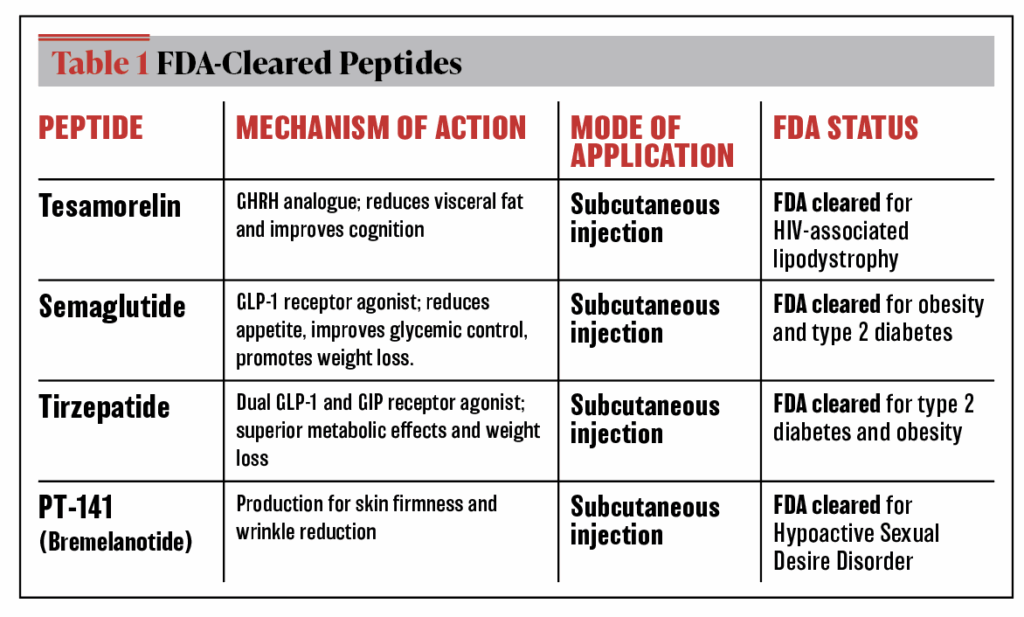
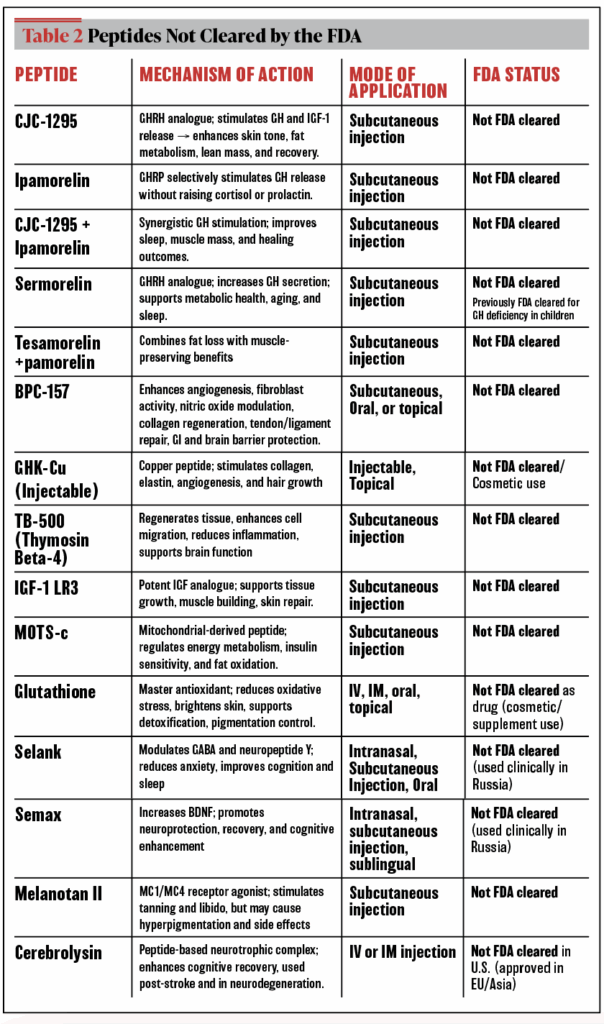
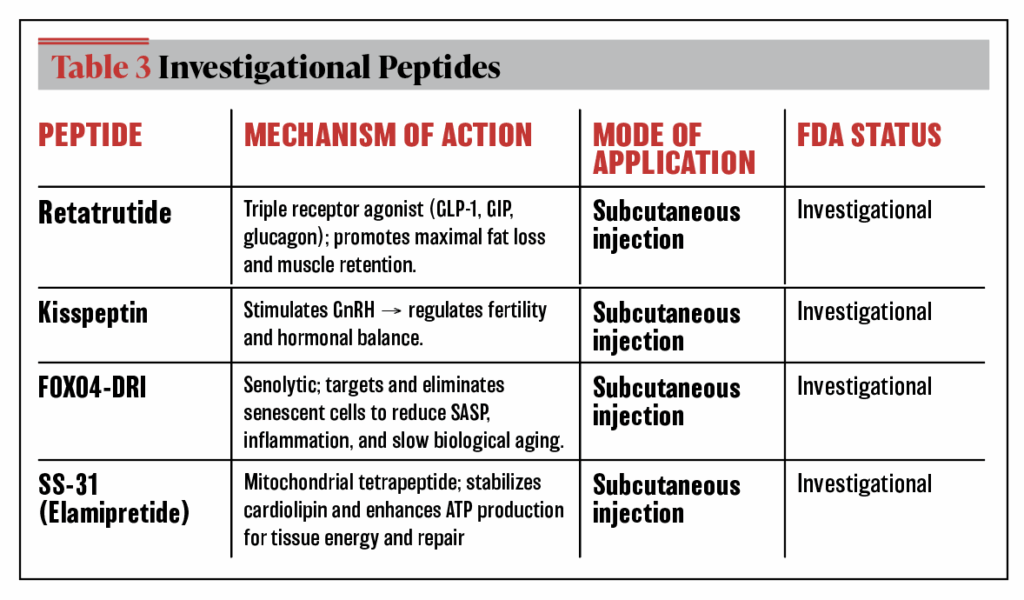
Injectable peptides such as BPC-157, GHK-Cu, TB-500, CJC-1295, Ipamorelin, and Tesamorelin target tissue repair, skin rejuvenation, fat loss, and cognitive support. For example, BPC-157 supports angiogenesis and wound healing1,2, while GHK-Cu promotes fibroblast activation, collagen synthesis, and hair regrowth3. CJC-1295 and Ipamorelin stimulate endogenous growth hormone, improving skin tone and fat metabolism10,20. Tesamorelin, FDA-cleared for lipodystrophy, reduces visceral fat and supports cognitive function11. Additionally, GLP-1 receptor agonists such as semaglutide and tirzepatide promote weight loss, with synergistic benefits when combined with peptides that preserve muscle mass12–14,18. Other advanced agents include FOXO4-DRI, a senolytic that targets ageing cells8,9,21, and IGF-1 LR3 for muscle and skin health22,23.
Topical peptides
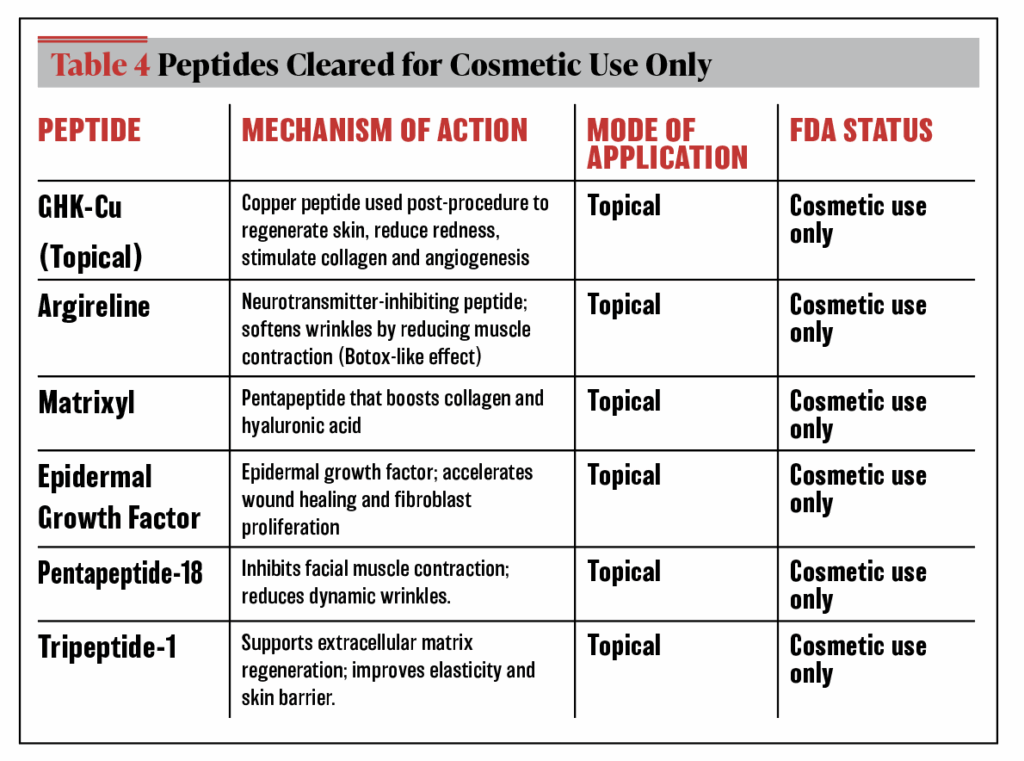
Topical peptides such as GHK-Cu, Argireline (Lubrizol Wickliffe, Ohio, USA), Matrixyl (Sederma, France), and Snap-8 (Lubrizol Wickliffe, Ohio, USA) offer anti-ageing benefits when applied post-procedure or on their own. They reduce dynamic rhytides, promote dermal remodelling, and enhance hydration3,5–7.
Exosomes can also carry peptides and amino acids and can further boost outcomes by delivering growth factors and RNA fragments to stimulate regeneration. In combination with peptides and energy-based modalities, they optimise recovery and collagen renewal24.
Discussion
Peptides offer a promising therapeutic strategy in aesthetics but must be used judiciously. While agents like PT-141 are FDA-cleared for specific indications25, others, such as Melanotan-II, are not and pose risks such as hyperpigmentation25. However, regardless of regulatory oversight, the black market for peptide use is thriving and unlikely to diminish. Patients are obtaining significant results with peptides, often without medical supervision, due to their perceived safety and efficacy. As clinicians, our role is not only to understand these agents but also to guide patients toward safer, evidence-based choices. By staying educated, we can help patients navigate the growing availability of peptides and steer them away from potentially harmful or poorly formulated products. Moreover, because peptides are simply short chains of amino acids—foundational building blocks of proteins—they may be considered closer to nutraceuticals or functional supplements rather than traditional pharmaceuticals, depending on structure, route of use, and regulation3,24. As we move forward, the integration of peptide therapies with hormonal support, appropriate diagnostics, and personalised protocols will be essential to optimise safety and patient outcomes.
Conclusion
Peptides are powerful tools that bridge the gap between traditional aesthetic procedures and regenerative medicine. Their clinical integration—particularly when combined with technologies such as exosomes, microneedling, and energy-based devices—offers a patient-centred, biological approach to skin health, body composition, and overall vitality. As the field evolves, so too must our understanding and responsible use of these therapies.
References
- Sikiric P, Seiwerth S, Rucman R, et al. Stable gastric pentadecapeptide BPC‑157: an overview of experimental research on its pleiotropic effects. Curr Pharm Des. 2011;17(16):1612–1632.
- Pevec D, Sikiric P, Zoricic I, et al. Therapeutic effects of BPC‑157 on muscle, tendon, ligament, and bone injuries. Curr Pharm Des. 2011;17(16):1697–1712.
- Pickart L, Margolina A. Regenerative and protective actions of the GHK‑Cu peptide in the light of the new gene data. Clin Cosmet Investig Dermatol. 2015;8:1–12.
- Zempo H, Sugino T, Kimura K, et al. Mitochondrial‑derived peptide MOTS‑c is a regulator of muscle and fat metabolism. Aging Cell. 2015;14(3):358–367.
- Blanes‑Mira C, Clemente J, Jodas G, et al. A synthetic hexapeptide (Argireline) with anti-wrinkle activity. Int J Cosmet Sci. 2002;24(5):303–310.
- Blanes‑Mira C, Clemente J, Jodas G, et al. A synthetic peptide that mimics the N-terminal end of SNAP-25 reduces facial expression wrinkles. Int J Cosmet Sci. 2002;24(3):153–160.
- Robinson LR, Fitzgerald NC, Doughty DG, et al. Topical palmitoyl pentapeptide provides improvement in photoaged human facial skin. Int J Cosmet Sci. 2005;27(3):155–160.
- Huang Y, He L, Makarcyzk MJ, Lin Z. FOXO4‑DRI selectively removes senescent chondrocytes and improves cartilage quality in vitro. Front Bioeng Biotechnol. 2021;9:677576.
- Huang Y, He L, Makarcyzk MJ, Lin Z. FOXO4‑DRI improves Leydig cell senescence and testosterone levels in aged mice. Aging (Albany NY). 2021;13(16):202682.
- Teichman SL, Neale A, Lawrence B, et al. Prolonged stimulation of GH and IGF‑1 secretion by CJC‑1295, a long‑acting GH‑releasing hormone analog. J Clin Endocrinol Metab. 2006;91(3):799–805.
- Falutz J, Mamputu JC, Potvin D, et al. Long‑term safety and effects of tesamorelin in HIV patients with abdominal fat accumulation. J Acquir Immune Defic Syndr. 2010;53(3):311–322.
- Wilding JPH, Batterham RL, Calanna S, et al. Once‑weekly semaglutide in adults with overweight or obesity. N Engl J Med. 2021;384(11):989–1002.
- Jastreboff AM, Aronne LJ, Ahmad NN, et al. Tirzepatide once weekly for the treatment of obesity. N Engl J Med. 2022;387(3):205–216.
- Lin HV, Zhang J, Wang H, et al. Tirzepatide improves metabolic dysfunction in diet‑induced obese mice. PLoS One. 2023;18(2):e0281372.
- Jastreboff AM, Kaplan LM, Frías JP, et al. Triple‑hormone‑receptor agonist retatrutide for obesity – a phase 2 trial. N Engl J Med. 2023;389(13):1151–1164.
- Lee C, Zeng J, Drew BG, et al. The mitochondrial‑derived peptide MOTS‑c promotes metabolic homeostasis and insulin sensitivity. Cell Metab. 2015;21(6):896–908.
- Lee C, et al. MOTS‑c prevents obesity and insulin resistance in mice. Sci Rep. 2015;5:113–115.
- Singh AK, Singh R. Efficacy and safety of semaglutide in patients with obesity: lessons from the STEP trials. J Investig Med. 2022;70(1):5–10.
- Goldstein AL, Hannappel E, Kleinman HK. Thymosin β4: actin‑sequestering protein moonlights to repair injured tissues. Ann N Y Acad Sci. 2012;1270(1):17–25.
- Kraemer WJ, Ratamess NA, French DN, et al. Dose responses of GH‑releasing peptides combined with resistance exercise in men. J Appl Physiol. 2005;98(6):2251–2259.
- Baar MP, Brandt RMC, Putavet DA, et al. Targeted apoptosis of senescent cells by a FOXO4‑DRI peptide improves healthspan in mice. Cell. 2017;169(1):132–147.e16.
- Laron Z. Insulin‑like growth factor 1 (IGF‑1): a growth hormone. Mol Pathol. 2001;54(5):311–316.
- Yakar S, Rosen CJ, Beamer WG, et al. Circulating levels of IGF‑1 directly regulate bone growth and density. J Clin Invest. 2002;110(6):771–781.
- Seeds WA. Peptide Protocols: Volume One. 1st ed. William Seeds Publishing; 2020.
- Wessells H, Grimes M, Hadley M, et al. Melanocortin receptor agonists for erectile dysfunction: preclinical and clinical results with Melanotan‑II. J Urol. 2000;163(2):456–463.