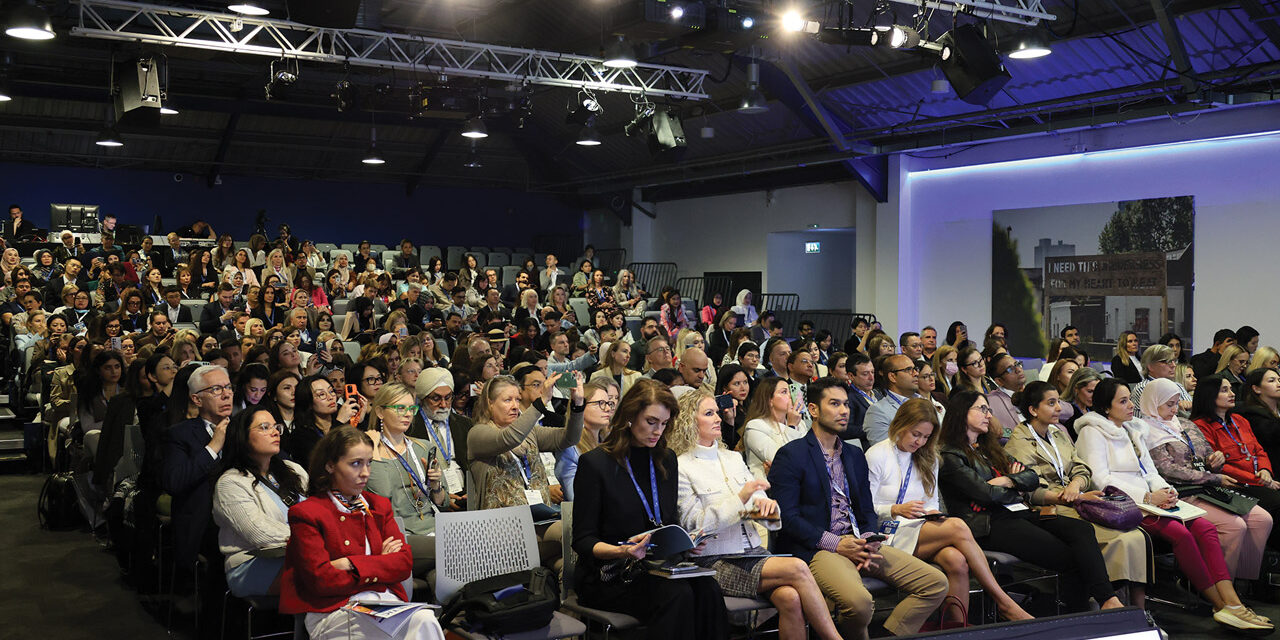
PRIME speaks to experts on the insights they will be sharing at the FACE Conference and Exhibition in London, UK, on June 26-27, 2025
The 2025 Facial Aesthetic Conference and Exhibition (FACE) may be taking place in the UK, but this year’s focus on the science of regenerative and anti-ageing medicine is top of mind for aesthetic providers worldwide.
Held between June 26 and 27 in London, this year’s FACE is bringing together thought leaders, scientists and clinicians from around the world with expertise in regenerative and anti-ageing treatments. PRIME highlights what some experts believe are the biggest game-changers in aesthetic regenerative and longevity medicine.
‘The biggest trends within the medical aesthetic space right now are regenerative medicine/biostimulatory agents, personalised treatments, and maintaining a natural appearance. Technology is rapidly evolving, so the market will continue to be flooded by innovation, each claiming to be the newest and greatest laser/energy-based devices, botulinum toxins, fillers, stem cells, and compounds like exosomes, polynucleotides, and countless others that claim to work on longevity and health span,’ says FACE speaker Vivian Bucay, MD, FAAD, of the Bucay Center for Dermatology and Aesthetics in San Antonio, Texas, USA.
Dermatologists, plastic surgeons, cosmetic physicians, nurse practitioners, and other aesthetic providers are being exposed to evolving technologies aimed at improving health, inside and out. To make that journey a little easier, we asked some who have devoted themselves to longevity and regenerative medicine game-changers.
Harnessing Mitochondria as an indicator for skin health
Mark Birch-Machin, PhD, professor of molecular dermatology at Newcastle University, pioneered the use of mitochondria as a skin health biomarker in the mid-1990s and has been focused since on making use of the biomarker widely accessible with a non-invasive skin swab.
Today, the founder and Chief Scientific Officer of Skin Life Analytics and 2023 recipient of the prestigious Society of Cosmetic Scientists Lifetime Achievement Award, says his work focused on human skin’s response to the environment in the context of skin ageing and disease has come full circle. Now, it’s easy for aesthetic practices and patients alike to better understand the power they have over skin ageing and the delivery of personalised skin health strategies.
Skin Life Analytics, a Newcastle University spinoff, just launched the world’s first skin swab test measuring the health of the batteries of cells, namely mitochondria.
‘The single biggest game-changer for healthier skin and to help it thrive in 2025 is the dynamic monitoring of the powerhouse of mitochondria within our skin. This groundbreaking science, using mitochondria as a unique skin health biomarker, empowers everyone to test and track their skin’s inner molecular health and bioenergy, thereby making the invisible damage visible,’ says Professor Birch Marchin, who is lecturing during the FACE conference ‘Advances in Regenerative Aesthetics’ session on ‘Novel biomarkers of skin health and how they can be used to monitor skin interventions and treatments.’ He is also presenting a talk entitled ‘Skin swab mitochondrial DNA test’ during the ‘Science of Regeneration and Longevity’ session.
Environmental factors, including UV light exposure, pollution, and smoking; lifestyle factors, including sleep, diet, and exercise; as well as biological factors, such as age and genetics, are primary interacting factors responsible for skin appearance changes.
‘Understanding how these different factors affect our skin’s health and what can be done to prevent them can promote and prolong overall skin health and help to counter the skin ageing phenotype,’ according to a paper Professor Birch-Machin recently coauthored in PMFA Journal1. ‘Measuring mitochondrial damage in skin serves as a highly sensitive and reliable biomarker of skin health. Following exposure to different external and internal stressors, this technology can lead to a more customised skin health approach to the individual, including smart targeting of skin interventions.’
The more people understand the skin ageing potential of these stressors, the more empowered they are to follow, implement, and track the success of healthy skin ageing strategies, he says.
The power of bio-rejuvenation
Professor Syed Haq, MBBS, BSc, PhD, DIC, MRCP(UK), consultant physician and founder of AM Aesthetic in London and Belfast, says, ‘In a nutshell, the most important change in aesthetic cosmetic medicine in recent years that will no doubt evolve over the next decade or more will be in the area of bio-rejuvenation. When we talk about bio-rejuvenation, those are elements, proteins, growth factors, hybrids—whatever they may be, that have an intrinsic impact on the health of the cell. That will transmit into the way a person looks and feels.’
Leading bio-rejuvenators in Europe and Asia are called polynucleotides, which are short DNA fragments, according to Dr Haq, who presented at the conference during the ‘Science of Regeneration and Longevity’ sessions, with an overview on longevity.
‘[Bio-rejuvenators] are derived from a natural source–either from the spermatozoa (sperm) of farm trout or wild salmon. I launched both in the UK years ago, but now I’m a much bigger advocate of the trout version,’ Dr Haq says.
Dr Haq notes that in his experience, the sperm-based derivative of salmon resulted in more allergic issues.
‘Trout has a much more unblemished impact on patients, and it is so versatile. We use it for improving skin laxity, collagen, and elastin production. We use it in the face, the under-eye area — a particularly delicate area of the face to treat. We use it to treat scars and for other skin conditions—acne, rosacea, redness. You can use it in the face, the neck, the backs of the hands, areas of stress and strife including around the tummy,’ he says.
Dr Haq uses the bio-rejuvenator as a standalone treatment or in conjunction with other types of aesthetic treatment.
‘I advocate for early preemptive use. You can prime the skin and what happens thereafter is if you were to conduct treatment with botulinum toxin, dermal filler, chemical peel or even surgery, the outcome will be noticeably better,’ he says.
The injectable comes in a 2 mL syringe, which when injected intradermally targets the fibroblasts directly.
‘The polynucleotide binds to cell surface receptors on the fibroblast, which [results] in various triggers that bring about some of the things that I just mentioned, including increased cellular migration. All of this is important for rejuvenating the skin,’ Dr Haq adds. ‘I use it in patients with young scars and even scars as old as three or four decades. And it still works well.’
Croma-Pharma’s Polyphil is a popular brand available in Europe, but these products are not available in the US.
Vivian Bucay, MD
The biggest trends within the medical aesthetic space right now are regenerative medicine/biostimulatory agents, personalised treatments, and maintaining a natural appearance.
Hand-held, portable laser niche
One of today’s biggest game-changers in anti-ageing medicine is the hand-held portable MultiFrax laser, according to Jeanine B. Downie, MD, FAAD, director of image Dermatology, in Montclair, NJ, USA.
A novel concept in the aesthetic laser space, MultiFrax (Powered by MRP, Park City, Utah, USA) simultaneously delivers 1550nm/1927nm non-ablative and thulium laser wavelengths, offering the capabilities of traditional lasers in a sleek, portable, and cordless design.
This compact technology has been available in Europe and Asia since 2020, according to Dr Downie.
MultiFrax treatment is good for all skin types and with less downtime than after treatment with traditional laser devices. According to Dr Downie, downtime with MultiFrax treatment is about four to five days as opposed to over a week with similar laser treatments because users can increase and decrease the spot size, as well as increase and decrease the density,
And there’s no sacrifice in power, Dr Downie adds. The power of the device is equivalent to non-ablative and thulium lasers, and the MultiFrax tip has two million pulses, which can treat 40 to 80 patients, depending on the size of the area that you are treating.
‘MultiFrax with novel SimulScan technology powers the only device on the market delivering two fractionated wavelengths simultaneously. Two wavelengths hitting the skin surface simultaneously allows for better heat penetration, generating unparalleled results for your patients,’ she says.
MultiFrax is the first portable SimulScan 1550 nm/1927 nm laser, according to company press materials.
Treatment with the technology’s 1550 nm non-ablative resurfacing laser corrects textural irregularities, from wrinkles to acne scars, while the 1927 nm thulium laser treats sun damage to dyschromia and melasma.
‘It is a game-changer because the 1550 nm and the 1927 nm work independently or simultaneously to address a wide range of skin texture and pigment concerns. And the fact that it is hand-held–about the size of a cell phone–is also a game-changer,’ notes Dr Downie, who is presenting on hormonal health, aesthetic treatment of the perioral area and lips, as well as skin of colour during the FACE conference.
One of the most significant advancements in anti-ageing and regenerative medicine in 2025 is the focus on restoring nicotinamide adenine dinucleotide (NAD+) — a vital coenzyme that declines with age, leading to reduced cellular function, skin ageing, and overall fatigue.
Nichola Conlon, PhD
NAD+ clinically proven to reverse biological age
Nichola Conlon, PhD, a molecular biologist specialising in the study of cellular ageing and founder of Nuchido, is presenting during the FACE meeting’s ‘Science of Regeneration and Longevity’ session on what she believes is today’s biggest breakthrough in anti-ageing: a specially formulated version of NAD+.
‘One of the most significant advancements in anti-ageing and regenerative medicine in 2025 is the focus on restoring nicotinamide adenine dinucleotide (NAD+) — a vital coenzyme that declines with age, leading to reduced cellular function, skin ageing, and overall fatigue,’ according to Dr Conlon. ‘NAD+ is essential for DNA repair, energy production, and activating longevity-related proteins that regulate our cellular health.’
As a molecular biologist specialising in healthy ageing, Dr ConIon says she has been fortunate to be at the forefront of this research and as the founder of Nuchido, she has dedicated her career to translating cutting-edge longevity science into accessible, effective solutions at home.
‘Recognising the limitations of traditional NAD+ supplements, Nuchido TIME+ is a scientifically formulated supplement developed not only to replenish NAD+ levels but also to enhance the body’s ability to produce it naturally,’ she adds.
A clinical study published last year in npj Aging2 demonstrated that after 28 days of supplementation, participants experienced a significant rise in NAD+ levels, a reduction in pro-inflammatory markers, and an average decrease in biological age by 1.26 years.
These findings highlight the crucial role of NAD+ in slowing the ageing process at a cellular level, Dr Conlon reasons.
‘For aesthetic practitioners, integrating Nuchido TIME+ into treatment plans offers a science-backed approach to skin rejuvenation and cellular repair. By supporting collagen production, reducing inflammation, and improving overall cellular function, it provides patients with a powerful inside-out solution for healthier, more youthful skin and supports their overall wellbeing,’ she says.
Glycans: ageing’s master regulators
‘Glycans, master regulators of ageing, immunity, and inflammation, are among the most precise biomarkers of biological age. Though studied for over 30 years, we are only beginning to unlock their full potential, with 2025 marking a pivotal moment in harnessing glycans for regenerative medicine and longevity science,’ says Gordan Lauc, PhD, professor, director of the National Centre of Scientific Excellence in Personalized Healthcare and Genos Glycoscience Research Laboratory, Zagreb, Croatia.
Glycans are generated by modifying proteins with chemical structures that integrate genetic, epigenetic, and environmental information. Hundreds of genes are involved in the complex pathway of glycan biosynthesis, and glycome composition is notably heritable.
Alternative glycosylation, which refers to the attachment of different glycans to the same glycosylation site on a protein, modulates protein function. As a result, it participates in the transition from health to disease, according to Dr Lauc.
Dr Lauc and his team have analysed more than 200,000 individuals and demonstrated that glycans have significant biomarker potential in the personalisation of pharmacological and lifestyle interventions to promote health and decrease the risk of disease development. The research led to him developing the GlycanAge test, which is used to gauge health, wellness, and longevity, as well as optimise therapy through menopause.
Dr Lauc is presenting ‘Glycans — A Breakthrough in Personalised Health and Ageing Biomarkers’ at the FACE conference.
Harnessing what’s tried and true
After deliberating about the biggest game-changers in regenerative and anti-ageing medicine, Dr Bucay says that one stands out: Sculptra (Galderma Laboratories, Zug, Switzerland), for its biostimulatory effects across all ages and ethnicities, ‘especially as we learn more and more about how it affects a variety of cell types in the skin,’ says Dr Bucay, who will present at the FACE conference on ‘Advances in Regenerative Aesthetics’.
Sculptra, which is also referred to as poly-L-lactic acid (PLLA), affects more than just the fibroblasts (collagen and elastin-producing cells). PLLA also exerts positive effects on dermal macrophages, which promotes a shift from older to more youthful macrophages that stimulate collagen production. And dermal white adipocytes that promote wound healing and skin immunity create a more favourable, or youthful, environment for fibroblasts to do their work, according to Dr Bucay.
Exciting times for living better for longer
Longevity medicine is only beginning to find its footing.
Longevity specialists meeting at a research institute in California last year gathered with the goal of being recognised as a credible medical field, according to an article in the MIT Technology Review3.
Participants talked about how modern medicine has for far too long focused on treating disease rather than preventing it and expressed their belief that it’s time to move from reactive healthcare to proactive healthcare.
By setting standards and guidelines for best practice in the field, this indeed could be the beginning of a revolution in medicine, the author writes.
‘The emerging field of longevity medicine represents a rapidly evolving multidisciplinary healthcare domain. It is dedicated to comprehending and extending the span of a healthy human life — a concept known as “healthspan”– rather than simply extending life in general…,’ researchers report in a recent review article in Frontiers in Aging4. ‘The rapid advancements in this field, coupled with growing global interest in ageing, present an exciting, yet challenging, frontier in healthcare, necessitating a balanced approach that considers both individual wellbeing and broader societal implications.’
For more, visit: www.faceconference.com
Written by Lisette Hilton, contributing editor
References:
- Sotia Iosifidou and Prof. Mark Birch-Machin. The impact of 21st Century stressors and lifestyle factors on skin ageing. Edinburgh: PMFA Journal, Febraury 2025. Available at: www.thepmfajournal.com/features/features/post/the-impact-of-21st-century-stressors-and-lifestyle-factors-on-skin-ageing
- Henderson, J.D., Quigley, S.N.Z., Chachra, S.S. et al. The use of a systems approach to increase NAD+ in human participants. npj Aging 10, 7 (2024). https://doi.org/10.1038/s41514-023-00134-0
- Hamzelou J. The quest to legitimise longevity medicine. MIT Technology Review. March 2024. Available from: https://www.technologyreview.com/2024/03/18/1089888/the-quest-to-legitimize-longevity-medicine/
- Artinovi A, Mantovani M , Trpchevska N, et al. Climbing the longevity pyramid: overview of evidence-driven healthcare prevention strategies for human longevity. Frontiers in Aging 2024, 5: https://doi.org/10.3389/fragi.2024.1495029