
As nonsurgical facelifting gains momentum, personalised, layered treatment strategies and precise anatomical assessment are redefining what can be achieved without surgery
As the demand for nonsurgical facelifting continues to accelerate within the field of aesthetic medicine, providers must stay well-versed in both the latest treatment options and emerging technologies. Success hinges on a thorough patient assessment and clear communication of realistic expectations, ensuring that individual needs are carefully evaluated. With a growing number of top treatments available, aesthetic professionals are uniquely positioned to deliver effective, personalised rejuvenation without the risks and downtime of surgery.
‘Every patient requires a customised approach,’ reported cosmetic surgeon Andre Berger, MD, founder of Rejuvalife Vitality Institute (Beverly Hills, CA, USA). He stated that, given the distinct components involved in facial ageing and the availability of targeted treatments for each aspect, protocols should be tailored according to comprehensive patient assessments. ‘A very thorough clinical evaluation helps create your treatment roadmap,’ he said. ‘During the evaluation, I explain to the patient that not one treatment addresses everything, but the right combination of treatments can provide a great outcome, which helps the patient follow through with the treatment plan. Providers should also keep the patient’s budget in mind because when you stack modalities, you also stack costs. Each component should be thoroughly addressed during the evaluation process to help manage expectations and increase patient satisfaction.’
Top treatments for facial rejuvenation
Today’s aesthetic providers have access to an impressive arsenal of nonsurgical facelifting modalities. Popular options to achieve nonsurgical facelifting encompass energy-based devices such as radiofrequency (RF) and ultrasound, which stimulate collagen and tighten the skin, as well as minimally invasive techniques like injectable fillers and neuromodulators that restore volume and soften dynamic lines. Thread lifts offer immediate lifting and contouring, while laser-based treatments, including those targeting skin laxity and texture, further refine the overall appearance. Advanced options such as Endolift (Eufoton s.r.l., Trieste, Italy) integrate cutting-edge technology to remodel tissue at deeper levels, enhancing jawline definition and facial contours without the need for incisions or extended recovery.
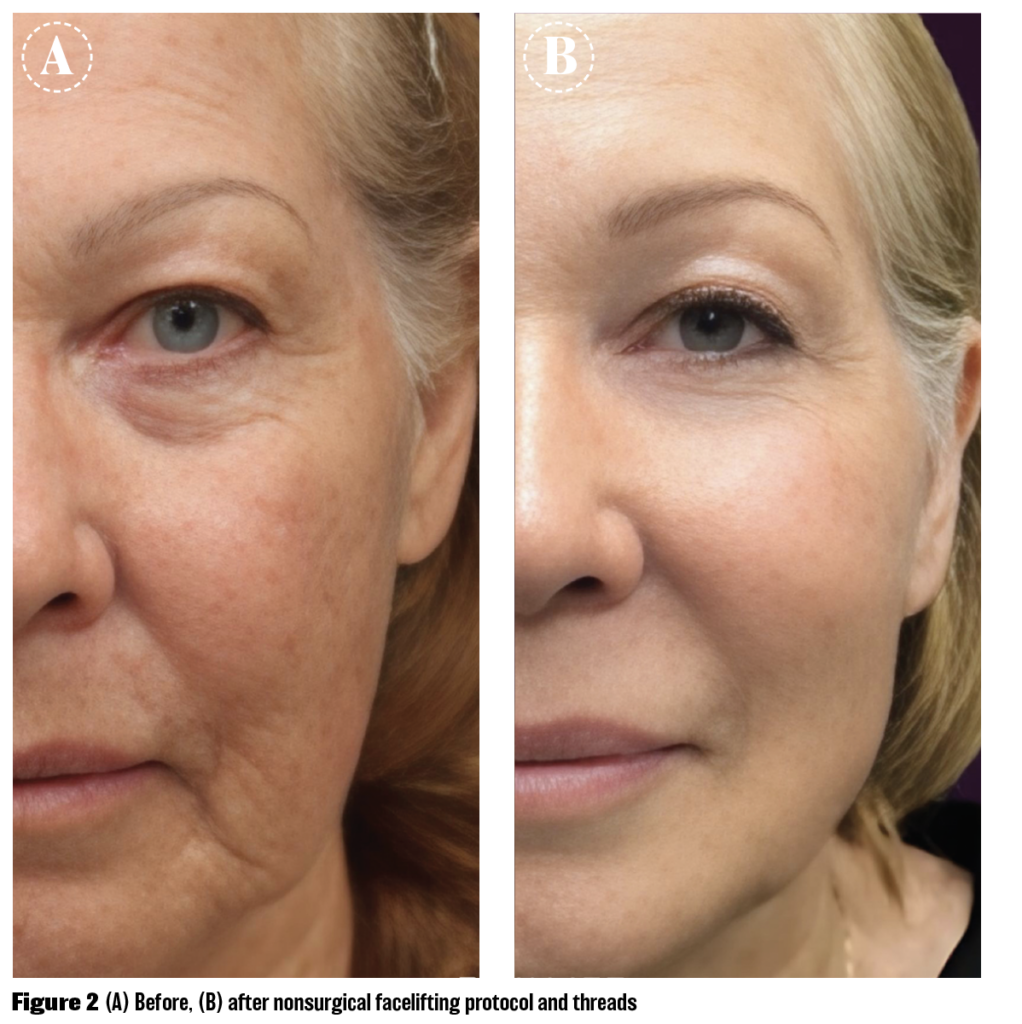
Dr Berger clarified that RF energy shows improvements for skin tightening, and while not suited for severe skin laxity, it is effective for mild to moderate laxity and patients in their 30s to 60s. High-intensity focused ultrasound (HIFU) can be used to target different depths of 1.5 up to 4.5 mm to reach the superficial musculoaponeurotic system (SMAS) layer for collagen remodelling and some tissue lift. But providers can get the most impact by combining these two treatments to harness the thermal effects of RF and the mechanical effects of ultrasound. He added that other treatments he frequently utilises in his Beverly Hills practice are suspension surgery, or thread lifting, and fat grafting.
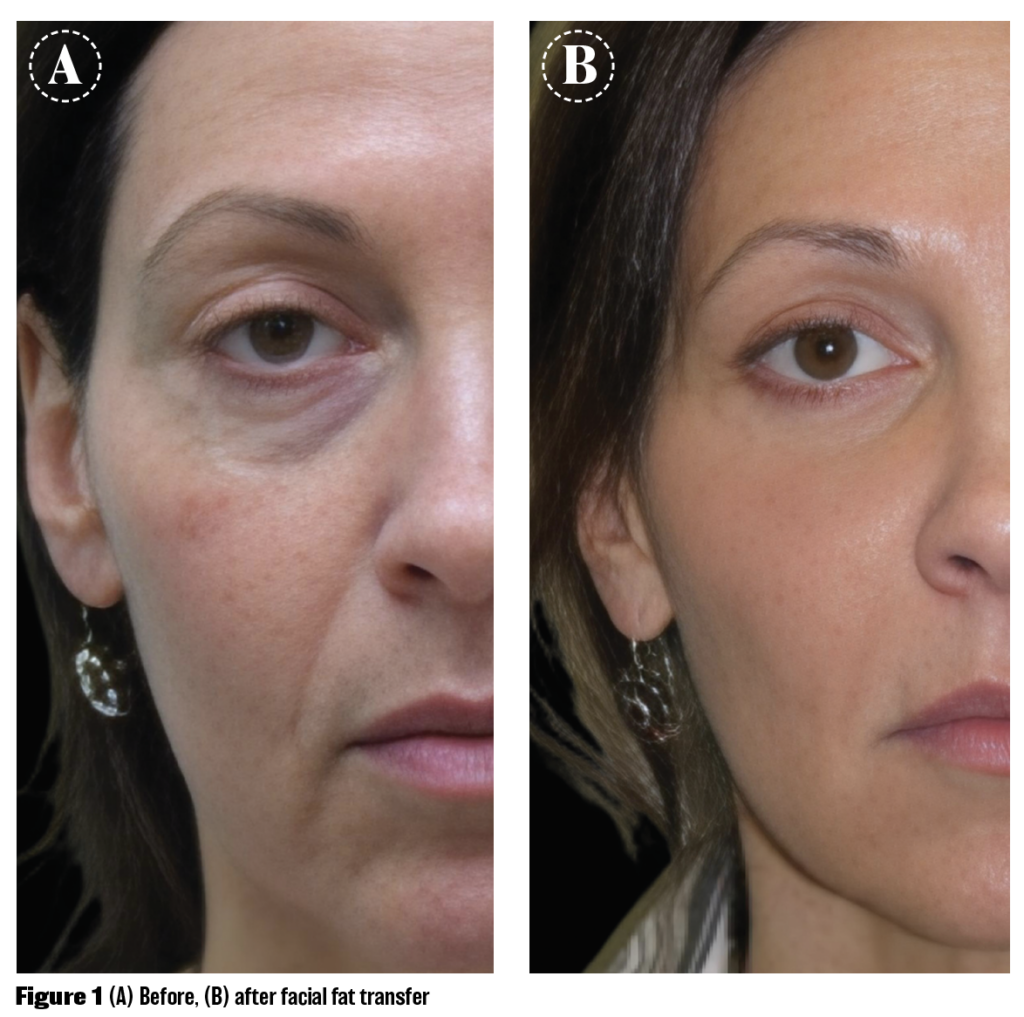
‘I often combine PLLA threads with injectable biostimulators or hyaluronic acid (HA),’ Dr Berger stated. ‘Some barbed PDO threads offer a lifting effect but are more effective at collagen stimulation, while PLLA threads offer a much more substantial lifting effect. I also use fat grafting to address a number of issues like volume and skin quality, or nano fat grafting to really target skin quality, especially around certain areas like under the eyes, for enhanced results. I may also use Botox to lift the brow or the platysma. If I can address all of the patient’s concerns with one modality, I will because it’s easier and more cost-effective. But most often we need a combination of treatments.’
According to board-certified plastic surgeon Dr Tunc Tiryaki, founder of the London Regenerative Institute (London, England), the most consistent and measurable outcomes for nonsurgical facelifting across age groups are achieved through a combination of RF microneedling with exosomes, biofiller and Botox. ‘For mild to moderate laxity, nonsurgical options can provide excellent outcomes, but patients with advanced sagging may be better suited to surgical lifting. I use skin pinch tests and elasticity assessments to evaluate tissue quality,’ he explained. After the assessment, he favours a layered approach to lifting, often beginning with RF microneedling combined with exosomes to tighten, remodel and enhance skin architecture through regenerative signalling. He then strategically incorporates biofiller to enhance definition and provide structural support, and Botox to relax dynamic facial muscles, smooth lines and complement the lifting effect. ‘Together, these modalities deliver reproducible improvements in skin quality, contour definition and overall facial rejuvenation. In addition, minimally invasive techniques such as fat injections enriched with stem cells restore volume while rejuvenating the surrounding tissues, further enhancing both the longevity and natural quality of results.’ He cautioned that the key to consistent outcomes is to respect the natural lifting vectors of the face, particularly those along the SMAS and retaining ligaments. ‘Treatments must be applied with an understanding of depth: superficial tightening for skin quality, mid-dermal interventions for collagen induction and deeper volumisation to restore structural harmony. Overfilling or misaligned approaches can lead to unnatural results,’ he added.
Vanessa Christopher, MD, a facial plastic surgeon at Sunder Plastic Surgery (Beverly Hills, CA, USA), utilises a similar philosophy with a focus on energy-based devices that target the SMAS or deep dermis, particularly RF microneedling and HIFU systems. ‘Among these devices, those with precise thermal coagulation point targeting offer reliable lifting in the lower face and jawline by stimulating collagen and elastin production, and contraction at the level of the SMAS,’ she reported. ‘RF microneedling has also shown strong consistency across a broad patient demographic and offers both dermal remodelling and mild lifting through volumetric heating, with the added benefit of skin resurfacing. It is especially effective in patients with early to moderate skin laxity and is well-tolerated across a range of Fitzpatrick skin types. For volume-deficient patients, biostimulators such as Sculptra® (Galderma, Zug, Switzerland) play a dual role in providing both scaffold-like support and stimulating long-term collagen production. When used in a vector-based approach, these agents can produce measurable lifting effects, especially in the mid- and lateral face.’
The vector approach
Dr Berger emphasised that he finds the most effective nonsurgical facelifting protocols are rooted in a layered, multi-modal approach that mimics the vectors, depth, and structural support typically achieved in surgical procedures, but with lower downtime and incremental results. According to him, as far as the vectors are concerned, during ageing the skin succumbs to gravity and often sags or loses firmness along very predictable vectors, including vertical and diagonal vectors, usually along the brow, midface, and jowls. Injecting fillers or biostimulators along the vectors of the mid-cheek to the temple or zygoma to the jawline supports the lifting effect. ‘A vector lift, or V-lift, basically combines deep and superficial filler injections to reposition the tissues in alignment with support of the facial ligaments,’ he clarified. ‘Additionally, threads and energy-based treatments should mimic the natural anatomy or the tension lines of the natural anatomy and avoid horizontal pulling, which distorts facial expression.’
Comprehensive protocols required
Elena Goltsova, MD, PhD, a dermatologist and cosmetologist, noted that a true facelift is only possible through surgery; however, in the nonsurgical space, certain rejuvenation techniques can yield long-term results. ‘Nonsurgical facelifting entails skin reconstruction, enhancement of collagen fibre production, improvement of skin quality and facial ligament integrity, adjustment of skin tone, management of facial fat pads, and reduction of excessive muscle hypertonicity,’ she stated, and added that this comprehensive approach harmonises facial features to achieve a facelift-like visual effect by providing multi-level rejuvenation that addresses all tissues and layers of the face.
Dr Goltsova stated that for younger patients, treating facial muscles with botulinum therapy to prevent depressor muscle hyperactivity and maintaining skin health with non-ablative lasers, RF microneedling, and injections to boost skin regeneration and collagen is sufficient. For middle-aged patients, she recommends adding ligament treatments like micro-focused ultrasound (MFU) and lasers, while older individuals should receive comprehensive treatments that address the skin, ligaments, fat compartments, and volume restoration for optimal results.
‘Since 2020, I have successfully offered lifting techniques with micro-focused ultrasound to target ligaments of the face,’ Dr Goltsova continued. ‘To reduce unwanted fat pads, especially in the submandibular zone, and to contribute to a clear contour of the face, I prefer Endolift, a laser technology with which we can gently but effectively reduce excess fat, stimulate the synthesis of skin collagen, improve metabolic processes in the skin, and achieve visible lifting effects. Microneedling RF devices are also very popular in my combined protocols for skin contraction.’ She noted that each facelift protocol is very individual and complex and thought should be given while planning treatment and throughout the treatment course. ‘Before and after all facelifting procedures, I consider the preparation of all facial tissues for regeneration and improvement of metabolic processes. I prefer to use multi-level non-ablative laser technologies in combination with injections (PDRN-complex, amino acids, highly purified hyaluronic acid, and PRP-therapy) to maintain the homeostasis of skin cells during the treatment series.’
Patient assessment
According to Dr Christopher, assessing patient candidacy for nonsurgical facelifting begins with a comprehensive evaluation of both skin quality and underlying structural changes, particularly volume loss, ligament laxity, and fat compartment descent. She explained that when performing nonsurgical facelifting treatments, the most critical anatomical considerations involve an understanding of facial structure, vascular pathways, and ageing patterns. ‘First and foremost, it’s essential to assess the SMAS because although it is not surgically manipulated in these procedures, energy-based devices like HIFU and RF often aim to stimulate collagen remodelling at or near the SMAS level, so accurate depth targeting is vital. Equally important is vascular anatomy. A comprehensive knowledge of facial danger zones (such as the angular artery near the nasolabial fold, the supraorbital and supratrochlear vessels, and the facial artery’s course) is essential to avoid complications during injectables or device-based treatments. Facial fat compartments also necessitate close attention. Understanding how superficial and deep fat pads age and descend allows us to apply lifting techniques more strategically, often in combination with volumising treatments, to restore structural harmony. Lastly, the integrity of retaining ligaments and their anchoring points, such as the zygomatic and mandibular ligaments, must be respected to achieve effective yet natural-looking results. Ultimately, it is the interplay between anatomical precision and individualised assessment that ensures both safety and optimal aesthetic outcomes in nonsurgical facial rejuvenation.’
Dr Christopher added that she typically evaluates three key parameters: elasticity, thickness, and redundancy, while volume loss is mapped both statically and dynamically. This includes a tactile assessment, dynamic observation during facial movement, and, in some cases, imaging such as ultrasound to assess SMAS integrity and dermal density, which is especially important when considering energy-based modalities. Fitzpatrick type and sun damage history also guide her choice of modality and risk stratification. ‘I assess the superficial and deep fat compartments, particularly in the midface, temporal region, and jawline. Bony resorption in the pyriform, orbital rim, and mandible are also considered, as these significantly affect facial projection and contour. High-resolution photography helps document asymmetry and guide volumisation strategies. Candidacy is then determined by matching the anatomical findings with what nonsurgical modalities can reasonably achieve.’
Aesthetic advancements
In light of these innovations, the future of nonsurgical facelifting promises even greater safety, natural results, and longevity. Dr Berger mentioned an exciting advancement includes a device that utilises MFU with real-time imaging and offers deep collagen stimulation, as well as an acoustic wave-based technology for lifting that works across all the anatomical layers. ‘In just a few sessions, patients see some improvement in an eyebrow lift, jowl tightening, a reduction in fine lines, and their skin looks more vital,’ he added. ‘Additionally, new systems that use AI facial mapping to address the patient’s tissue gaps and anatomical contours and automatically tailor the energy being delivered are equally impressive.’
In Dr Tiryaki’s opinion, the most exciting developments are in regenerative medicine, particularly exosome therapy and bioengineered fillers. ‘These do more than provide volume – they actively repair and restore tissue quality. Also, minimally invasive fat grafting techniques enriched with stem cells are rapidly evolving, making nonsurgical lifting far more effective and durable. These innovations are shifting the field from temporary correction to true biological rejuvenation.’ By embracing these advancements, providers can deliver more natural, harmonious rejuvenation for a broader spectrum of patients, redefining what is possible in nonsurgical facial aesthetics.
- Written by Cindy Papp, contributing editor
- Figures 1–2 © Dr Andre Berger